Source Automatic A4 Paper Production Line for Office, School, and Print
Find 30 automatic a4 paper production line options from Chinese manufacturers. Compare capacities ranging from 10 to 100 tons per day, drive types, and customization features to identify the right machinery for your paperboard or cultural paper needs; compare the available evidence and request quotations based on your requirements.
Key considerations
Products List


2400 Culture A4 A3 Paper Writing Paper Making Machine Production Line Price
$700000.00 - $850000.00
Moq: 1


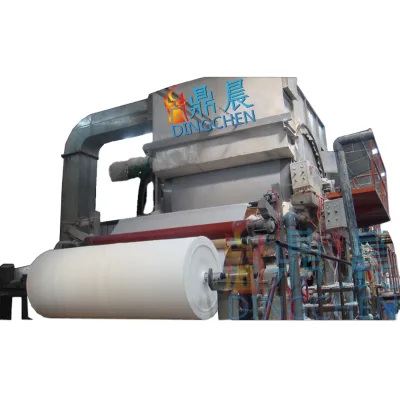


Fully Automatic A4 Copy Paper Production Line Roll A4 Paper Sheet Cutting
$600000.00 - $1500000.00
Moq: 1
Comprehensive Sourcing Guide
Automatic A4 Paper Production Line Sourcing Guide
The automatic A4 paper production line represents a sophisticated manufacturing solution designed for high-volume output of standard office and cultural paper formats. Based on observed market data, these systems typically utilize a Fourdrinier wire sheet former to process raw materials such as waste paper, virgin pulp, and recycled carton stock into finished paperboard or cultural paper products. Buyers should note that the production scope often extends to a full product line with flow production capabilities, ensuring consistent output rates that can reach up to 100 tons per day depending on the specific configuration selected.
Procurement decisions must account for the significant variance in machine specifications, particularly regarding net paper width and working speed. While some units are configured for a 1092mm width suitable for standard A4 formats, others offer a 3600mm finished paper width, requiring downstream cutting operations to achieve the final A4 dimensions. The drive systems frequently employ alternating current motors with frequency conversion for speed regulation, allowing operators to adjust working speeds between 100 and 310 meters per minute to match specific production demands and material properties.
Product Scope and Observed Listing Signals
When evaluating listings, buyers must distinguish between machines designed for direct A4 output and those producing wide rolls that require secondary processing. The observed product range includes units with a net paper width of 1092mm, which aligns closely with standard A4 requirements, alongside larger 3600mm wide machines that offer greater flexibility for various paper grades. It is critical to verify the specific paper type capability, as some lines are optimized for cultural paper while others focus on paperboard, ensuring the selected equipment matches the intended end-product specifications.
Customization availability is a key signal in the current market, with many suppliers offering tailored solutions for raw material inputs ranging from waste newspaper to virgin pulp. The production rhythm is generally characterized as a flow production line, which supports continuous operation and high efficiency. Buyers should scrutinize the listed capacity, which varies from 10 tons per day to 100 tons per day, to ensure the machine's throughput aligns with their facility's logistical capabilities and storage constraints before committing to a purchase.
Technical Specifications to Verify
Technical due diligence requires a close examination of the cylinder mould width and bearing center distances to ensure mechanical compatibility with the facility's infrastructure. Observed specifications indicate a cylinder mould width of 1350mm and a bearing center distance of 1800mm in certain models, which are critical dimensions for installation and maintenance planning. Additionally, the drive way often utilizes frequency conversion speed control, allowing for precise adjustments to the design speed of 310 meters per minute, which directly impacts the final paper weight and thickness consistency.
Buyers must also verify the dynamic balance ratings for rolls and cylinders, as these factors significantly influence machine stability and noise levels during high-speed operation. The data suggests balance speeds of 330 meters per minute with specific dynamic balance grades, such as G2.5 for rolls and G4 for cylinders, which are essential for maintaining product quality over long production runs. Furthermore, the working speed range of 100 to 310 meters per minute must be cross-referenced with the desired paper weight of 100 to 300 GSM to confirm the machine can handle the required paper thickness and gauge specifications without compromising output quality.
Compliance and Safety Documentation
Safety and regulatory compliance are paramount when sourcing industrial machinery, with CE certification being a standard requirement for equipment originating from major manufacturing hubs like Jiangsu Suzhou and Henan. Buyers should request valid CE certificates to ensure the machine meets European safety directives, which often serve as a baseline for global safety standards. The presence of these certifications indicates that the manufacturer has undergone rigorous testing for electrical safety, mechanical guarding, and operational hazards, providing a necessary layer of protection for plant personnel.
In addition to safety certifications, documentation regarding the production standard and material handling protocols must be reviewed to ensure alignment with local regulations. While some listings reference SGS standards, others indicate that standards depend on specific client requirements, necessitating a clear definition of the applicable norms before finalizing the contract. Buyers should also verify the warranty terms, which are typically offered for one year, and ensure that the documentation includes detailed manuals for emergency stop procedures and routine maintenance schedules to mitigate operational risks.
Cost Drivers and Commercial Terms
The pricing for automatic A4 paper production lines is heavily influenced by the production capacity, automation level, and the complexity of the customization options selected. Observed price ranges span from 9,500 to 1,800,000 USD, reflecting the vast difference between smaller, lower-capacity units and large-scale, fully automated systems capable of 100 tons per day output. Buyers should analyze the cost per ton of capacity to determine the most economical option, considering that higher initial investment often correlates with lower long-term operational costs due to improved energy efficiency and reduced labor requirements.
Commercial terms regarding packaging and shipping are also significant cost drivers, with suppliers typically offering wood case packaging to secure all movable parts during transit. The observed MOQ is generally one unit, providing flexibility for buyers who may not require immediate bulk procurement. However, lead times and delivery schedules can vary based on the origin, whether from Jiangsu Suzhou or Henan, and the specific customization needs. Buyers must clarify whether the quoted price includes installation support and training, as these services can significantly impact the total cost of ownership and the timeline for reaching full production capacity.
Supplier Qualification and Quality Control
Supplier qualification should focus on verifying the production origin and the specific manufacturing capabilities of the facility, as these factors directly impact the reliability and longevity of the equipment. The market data indicates origins in Jiangsu Suzhou and Henan, China, regions known for their established paper machinery manufacturing ecosystems. Buyers should request evidence of the supplier's production scope, confirming they operate a dedicated product line with flow production capabilities rather than a job-shop environment, which ensures consistent quality control and adherence to design specifications.
Quality control processes must be validated through the supplier's internal testing protocols and their ability to provide pre-shipment inspection reports. The use of automatic systems implies a high degree of precision, but buyers should verify the specific quality checks performed on the sheet former type and the final paper width consistency. It is advisable to request references from previous clients who have purchased similar models, such as the FRD-3600, to understand the real-world performance and durability of the machinery under continuous operation conditions.
Long-Term Procurement Checks
Long-term procurement success depends on establishing a robust framework for ongoing maintenance and spare parts availability, which is critical for minimizing downtime in continuous production environments. Buyers should negotiate service agreements that cover the warranty period and define clear protocols for post-warranty support, including the availability of critical components like frequency converters and cylinder moulds. The one-year warranty period is a standard baseline, but extending this coverage or securing a local service partner can provide greater peace of mind for high-volume operations.
Finally, buyers must plan for the scalability of their production line to accommodate future growth or changes in product specifications. The flexible nature of the drive systems and the ability to adjust paper weight and speed suggest that these lines can adapt to different market demands, but this requires a strategic approach to capacity planning. Regular audits of the machine's performance against the original design speed and balance specifications will help identify wear and tear early, ensuring that the production line continues to meet the required output quality and efficiency targets over its operational lifespan.
FAQs
Can the automatic a4 paper production line be customized?
Yes, customization is available for the automatic a4 paper production line. The system supports intelligent manufacturing and flexible production scopes. Buyers can adjust specifications such as paper weight from 100 to 300 GSM. The design allows for tailored output to meet specific industrial requirements and operational needs.
What is the daily capacity of the automatic a4 paper production line?
The automatic a4 paper production line offers varying daily capacities depending on the model. Some units produce 10 tons per day, while others reach up to 100 tons per day. This flexibility allows buyers to select a machine that aligns with their specific production volume targets and operational scale.
What certifications does the automatic a4 paper production line hold?
The automatic a4 paper production line holds CE certification. It also adheres to SGS standards for quality assurance. These certifications ensure the machinery meets international safety and performance benchmarks. Buyers can rely on these documented standards for compliance and operational reliability in global markets.
What is the working speed of the automatic a4 paper production line?
The automatic a4 paper production line operates at a working speed ranging from 100 to 310 meters per minute. The design speed reaches 310 meters per minute, with a balance speed of 330 meters per minute. This range ensures efficient production while maintaining paper quality and machine stability.
What raw materials can the automatic a4 paper production line process?
The automatic a4 paper production line can process waste paper, virgin pulp, waste carton paper, newspaper, and box paper. This versatility allows manufacturers to utilize various recycled and virgin fiber sources. The machine is designed to handle diverse input materials for producing copy paper and paperboard efficiently.
Where is the automatic a4 paper production line manufactured?
The automatic a4 paper production line is manufactured in China, specifically in Jiangsu Suzhou and Henan. These locations serve as the primary production origins for the machinery. Buyers can trace the equipment back to these established industrial hubs known for manufacturing high-quality paper production equipment.
What is the warranty period for the automatic a4 paper production line?
The automatic a4 paper production line comes with a one-year warranty. This coverage provides buyers with assurance regarding the machine's initial performance and reliability. The warranty supports the new condition of the equipment, ensuring that any manufacturing defects are addressed within the specified period.